I Explored the South Korean Startup Scene with Aaltoes: Insights from Seoul and Busan
Throwback to May 2023: I was in South Korea for 14 days to explore the startup scene with a couple of enthusiasts from Aaltoes (Aalto Entrepreneurship Society). After more than a year, I documented my experiences in this Article. We visited many companies, startups, incubators, and accelerators and used most of our time to gain insights. But in this article, I will share only information that I liked or felt had more value. There is no particular order in sharing them.
The best meeting for me in the whole delegation is meeting with a bunch of students from the local entrepreneur society. We had both formal and informal interactions — one at their space and another at a restaurant. S Korea has a certain level of hierarchy and most of our meetings followed a traditional structure, But meeting with these students allowed me to get what I truly wanted. Open and engaging discussions with a few of them and I would say they are true strivers. they want to do something in their society instead of doing some Job. Most of their parents wanted them to study at reputed universities, secure good jobs, and settle into stable careers — a traditional mindset. While in Finland such societal pressures are so minimal. But in India, many parents limit their children because of fear that their children might fail if they choose risky entrepreneurial paths. However, they said the situation in metropolitan areas has been evolving and they want to give major credit to the government for supporting by providing grants and loans. One thing they still hate is Its not ok to be a loser in society, which causes some mental health disruption sometimes when they think about failing.
“In South Korea, many are afraid to try because failing means being labelled a ‘loser’ in society”
The Nextrise Startup Conference was another best thing we covered. It’s the largest startup event in South Korea. Surprisingly it had free entry when we attended, just got in by filling up a simple form. The conference was top notch and it gave out its best to visitors. I had a chance to meet some early-stage and funded startups, there are many products in home tech, MedTech and a lot of AI-integrated products. While some of them are direct copies but lot of them had good innovative solutions. I liked the Medtech section more many products are useful internationally. I have attended many startup events and conferences but Nextrise is my favorite among them in terms of ROI for tech enthusiasts.
“The price game is key — they aim to create everything within a specific price segment of that category”
Met Marta Alina, a popular startup ecosystem player in Busan. She gave an insightful presentation about Korean history and the mindset of people. After the separation of North and South, the South developed allies with the USA and many students were sent to the U.S. from the 60s till today to learn and put the learnings live in their society, which is best practice.
I loved the way how S Korea loves S Korea. For example, they have their version of a solution for everything, they don't use Google Maps for navigation they have their way of navigation using Kakao Maps, and similarly Kakao Taxi replacing Uber. Many platforms in South Korea are copied from popular international ones but are adapted with a Korean touch and used locally. They have around 50 million population, so these companies have a strong customer base by default for homemade solutions. I noticed this perk after comparing it with Finland, Finland has around 5,5 million population which isn't enough to be self-reliant, so almost most of the Finnish companies tend to start building for international from day 1.
They prefer local products over anything, whether it's related to technology or automobiles. They try to search for a Korean solution to the problem. choose brands like Samsung for phones or Hyundai for cars and I love how loyal they are, it encourages local producers to produce more, and in India, it works quite oppositely. if they had a chance to go for the Indian version or the Western version, picking the Western version would be obvious among many. learned the fact that society is responsible for internal developments or growth factors. While this self-love for local products is good for their economy, it also creates challenges for foreign businesses to enter the Korean market, and almost every international business closed their service. But this didn't apply to the food industry, there are a lot of international chains of food chains, A bit strange! But the younger generation started going with international influence with more people being open to exploring global products and services.
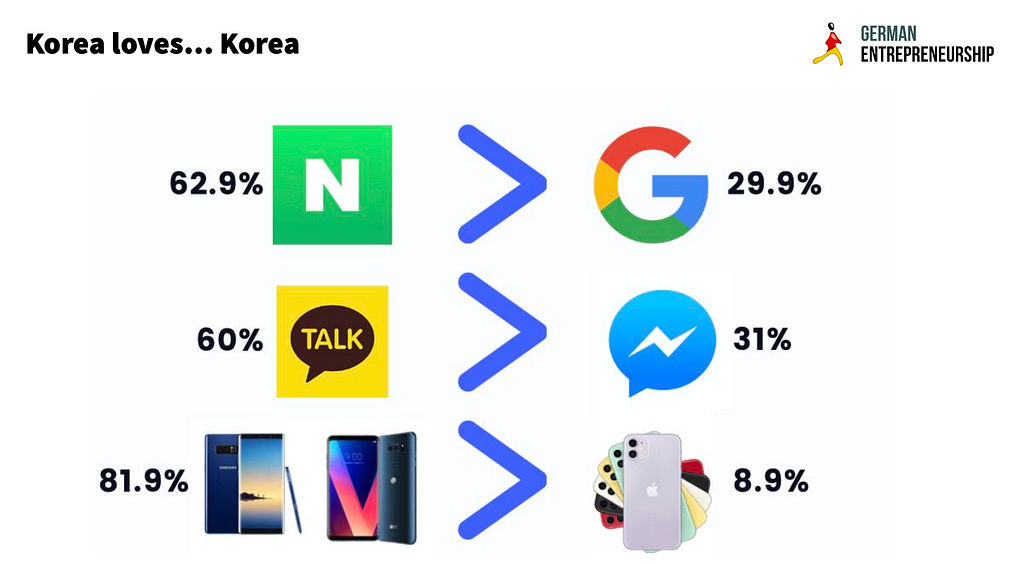
Countries like the U.S.A., China, Russia and South Korea have their domestic alternatives for everything. This brings better data security and boosts local industries. It can make things harder for ex-pats and travellers who want to use global platforms to make it smoother and easier. For example, in many other countries, we heavily depend on U.S.-based services like WhatsApp, Instagram, YouTube, and Google Maps and i always had concerns about data privacy. From a security perspective, having domestic alternatives keeps data within the country, making it safer.
“Loyalty and self-love have shaped the Korean startup scene into what it is today”
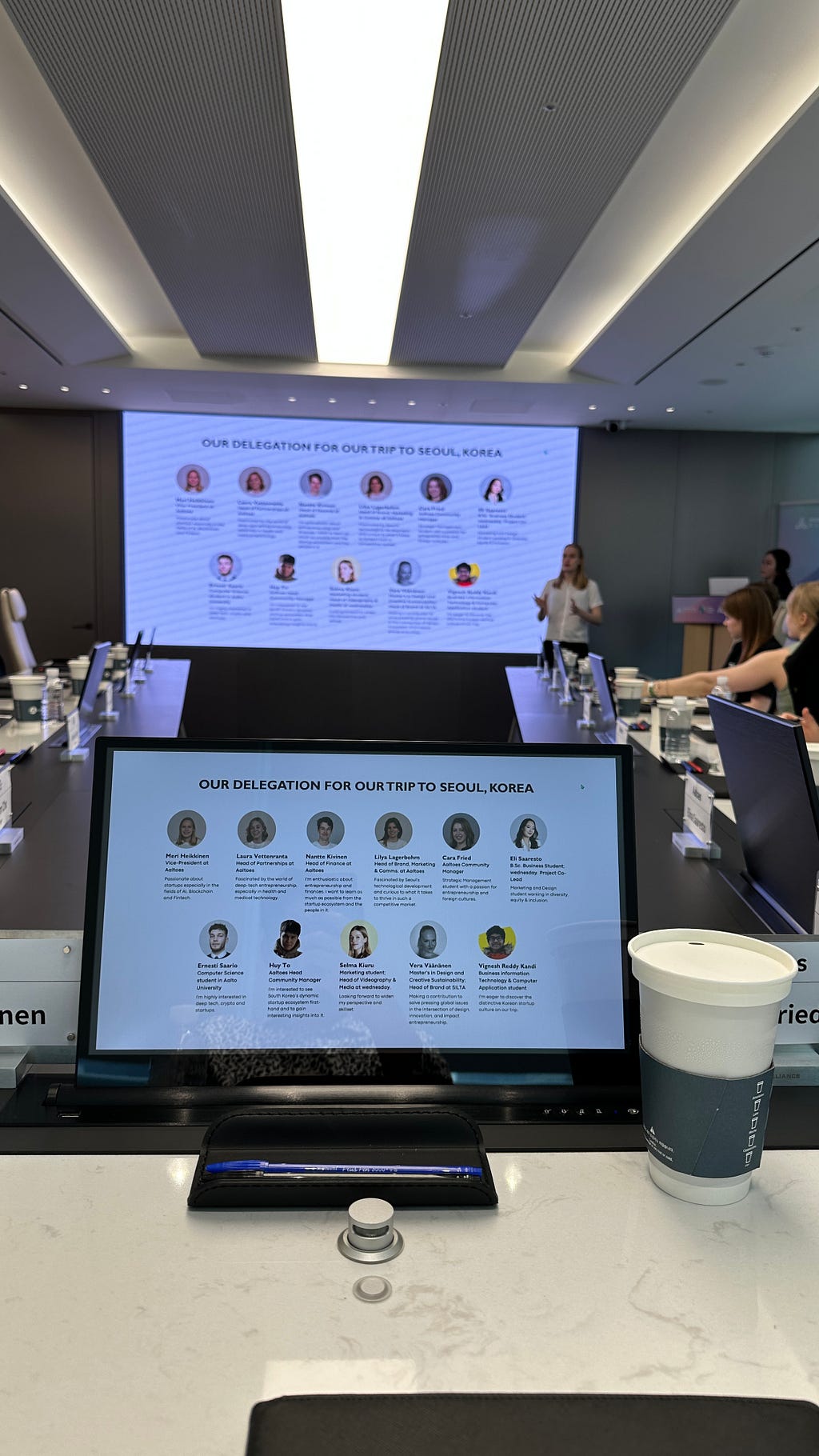
We also visited the Megazone cloud office, and I was impressed by how friendly and welcoming they were, even being a top player in the industry. The reception and hospitality were very good, with name display boards at our seats, and they researched a bit about Aaltoes and our goals and intentions added a personal touch and felt truly overwhelming. They openly shared all the information we asked for and were receptive to many questions and had some meaningful interactions.
As said earlier, to win in the South Korean space, the price game is important, and the magazine has mastered that. They focus on supporting young talent and provide many partnership and mentorship opportunities. They also support local startups, making them easily go global.
Some key learning :
South Korea is tough on foreign companies, as they prioritize local solutions and products over international ones.
They are highly independent in technology, with domestic alternatives for most global platforms.
The government invests heavily in startups, allocating around 2.7 billion USD annually to foster innovation and entrepreneurship.
South Koreans take learning and improvement seriously, often drawing inspiration from existing products and adapting them to their needs.
Nearly 90% of the success of Korean startups can be attributed to loyal local consumers who prioritize homegrown products.
The younger generation is embracing entrepreneurship, working hard to innovate and succeed.
With a strong support system and market, the chances of startups failing in South Korea are significantly lower.
Government had great vision and execution.
Many universities in South Korea promote entrepreneurship through programs, incubators, and funding opportunities for students.
Regular events like Nextrise, startup forums, and tech summits help entrepreneurs to connect, share, and grow their ventures.
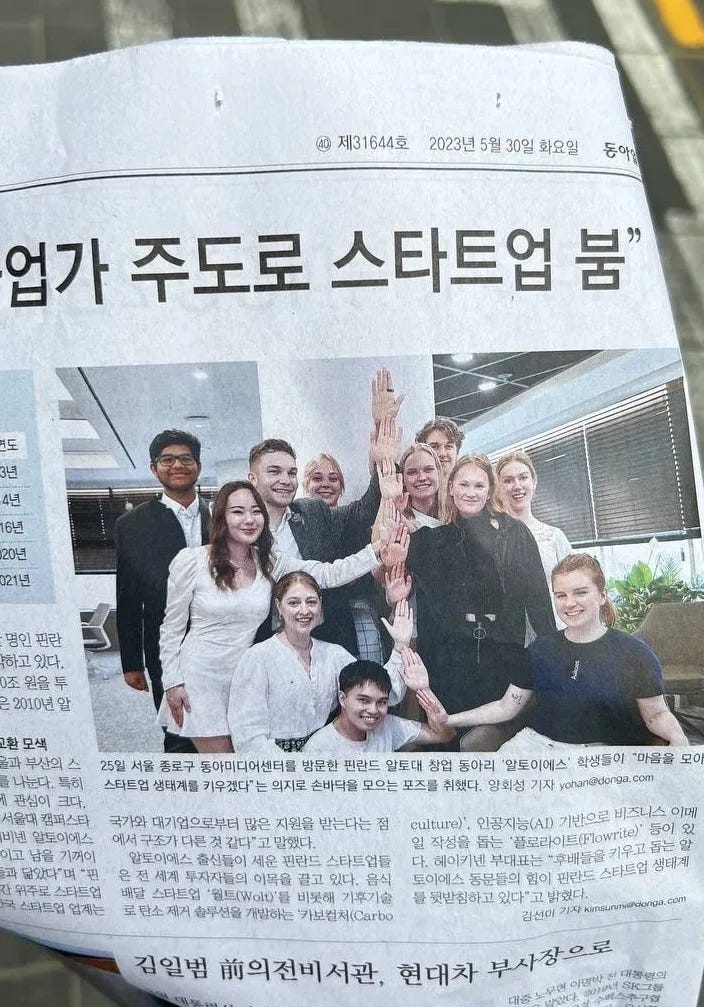
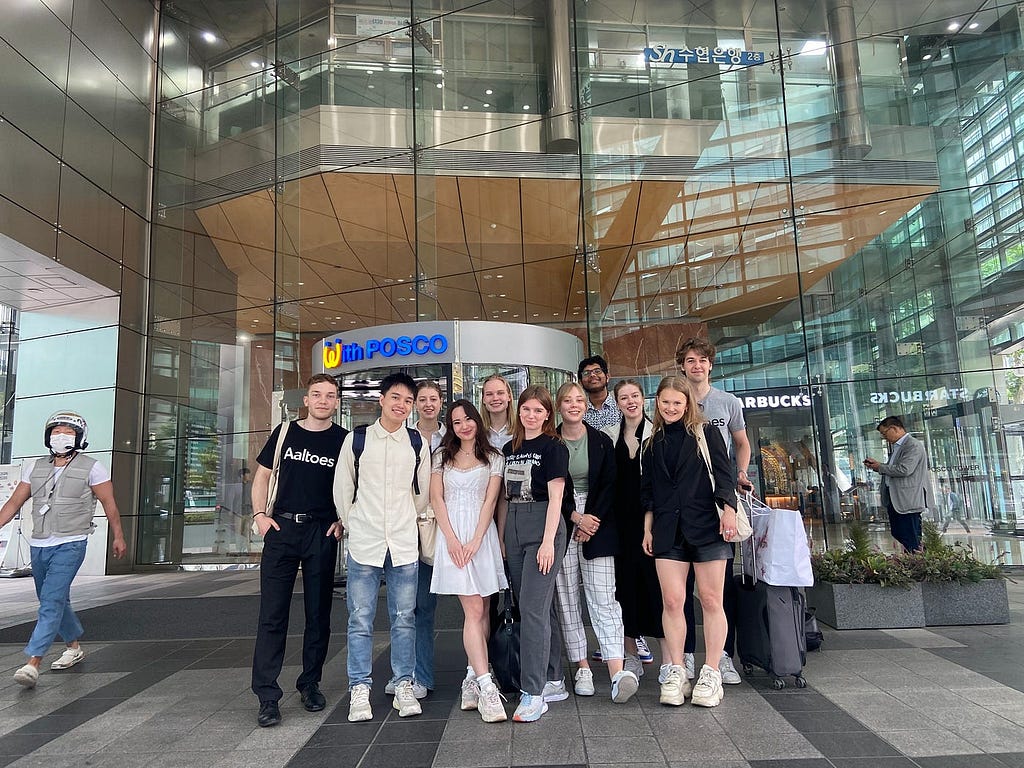
There were many learnings and insights throughout this journey, and the way everyone received us was truly exceptional. I want to share my heartfelt thanks to Aaltoes for giving me this opportunity and to all the organizations and individuals who made this learning trip unforgettable: Korean Startup Forum, Korea Investment Accelerator, SNU Campus Town, Busan Center for Creative Economy and Innovation, SNUSV, Shuttle, Next Challenge, BlissVine Ventures, Finnish Embassy, Startup Grind, Asiance, Sopoong Ventures, D.CAMP, German Startup Night, Nextrise, K-Ventures, D2 Startup Factory NAVER, Venture Startup Department, and Megazone.
If you’re interested in learning more about something mentioned in the article or need connections with any of these companies, feel free to reach out to me via email {vigneshreddykandi@icloud.com}. You can also connect with me on my LinkedIn to start a conversation or explore potential collaborations: https://vigneshreddy.me/linkedin
This post was first published on Medium ↗
Thoughts on this? Say hi →